.avif)
.avif)
PentaBind Joins £20m “Project Alpha 10.6” Initiative to Advance Next-Generation Precision Cancer Therapies

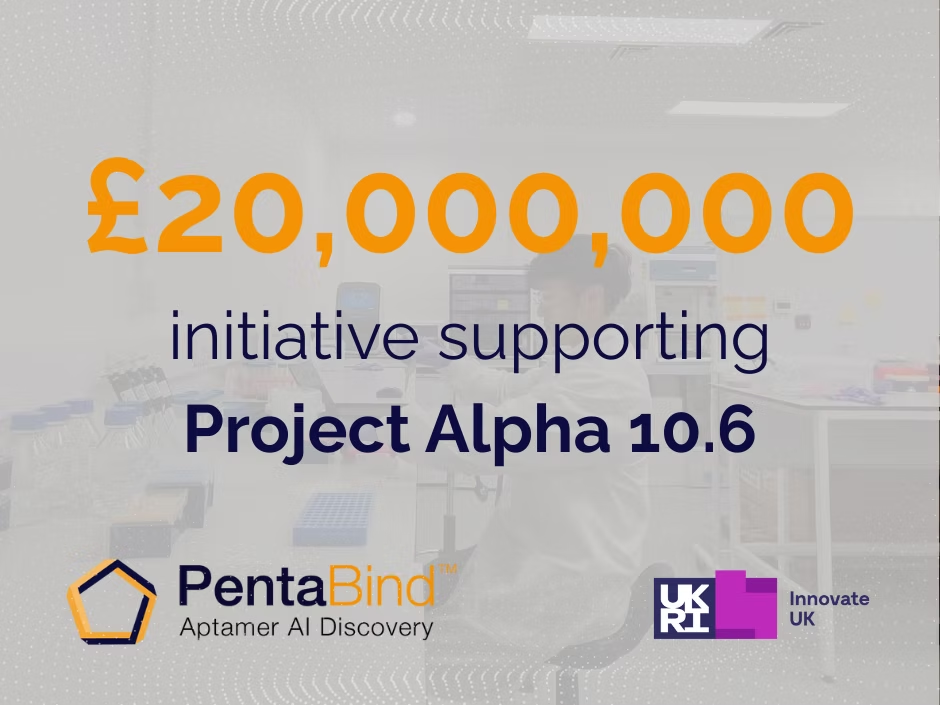
PentaBind is proud to announce its role in Project Alpha 10.6, a £20 million UK initiative that aims to transform recycled nuclear material into targeted alpha-emitting cancer medicines. The programme is funded by Innovate UK’s Sustainable Medicines Manufacturing Innovation Programme (SMMIP) and led by United Kingdom National Nuclear Laboratory (UKNNL) and Medicines Discovery Catapult (MDC). PentaBind contributes as the consortium’s targeting specialist, applying its AI-driven aptamer discovery platform to engineer high-affinity nucleic acid ligands capable of directing alpha-emitting radiotherapeutics specifically to tumour cells.
At the heart of Project Alpha 10.6 is lead-212, an alpha-emitting isotope with a 10.6-hour half-life. UKNNL has developed a groundbreaking method to extract lead-212 from recycled nuclear fuel, creating a sovereign and sustainable UK supply of this critical radionuclide. MDC will provide the radiochemistry expertise and preclinical infrastructure to convert the isotope into targeted radiopharmaceutical pre-clinical candidates.
PentaBind will apply its AI-driven discovery engine to develop aptamer ligands with optimised affinity, molecular selectivity and in-vivo stability for targeted alpha-radiotherapeutic applications. MDC will then label these aptamers with lead-212 and evaluate them in pre-clinical models. Aptamers bind and persist at tumour sites while unbound conjugates clear rapidly from circulation. This aligns their residence time with the 10.6-hour half-life of lead-212, ensuring that most of the therapeutic alpha dose is delivered where the ligand is bound, rather than accumulating in healthy tissue.
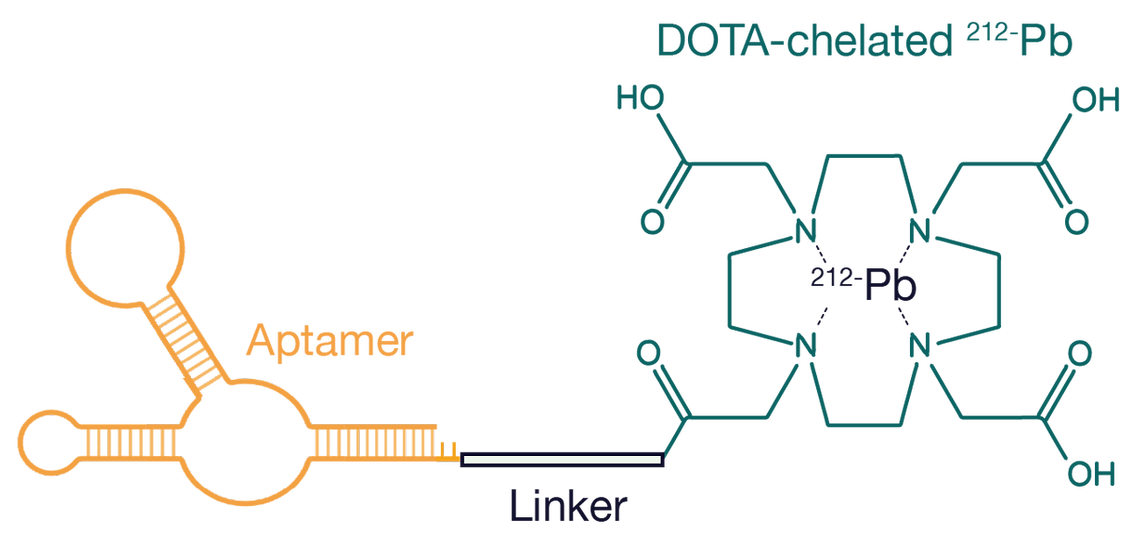
Illustration of the Aptamer System Used to Deliver Lead-212 to the Tumour Cells
Aptamers’ exceptional molecular specificity provides a highly efficient targeting mechanism: once the aptamer binds to a tumour cell, the attached alpha emitter exerts its potent therapeutic effect within a very short radius. Because alpha-particle therapy does not require cellular internalisation to be effective, the radionuclide can eliminate the targeted cell while also impacting adjacent tumour cells within a few cell diameters, known as the bystander effect.
In parallel with its consortium activities, PentaBind is building the UK’s first dedicated platform for aptamer-based targeted alpha therapy, creating a modular and scalable discovery engine capable of generating next-generation radiotherapeutics for multiple cancer types, including indications where traditional antibodies or small molecules have historically underperformed.
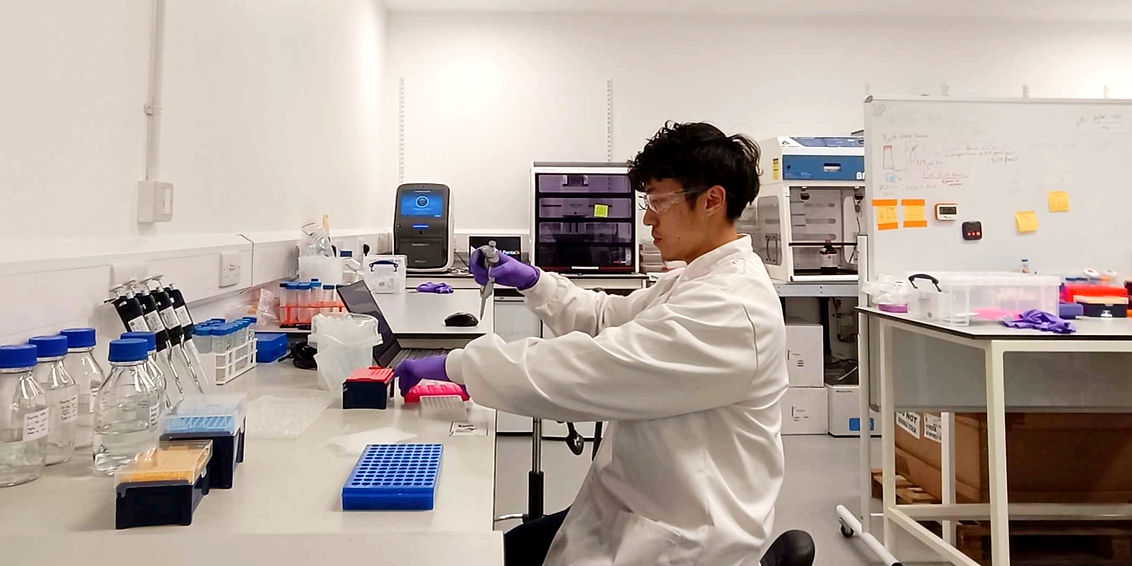
Radiopharmaceuticals represent a powerful and precise approach to cancer therapy
Phil Haynes, Co-Founder and Chief Technology Officer at PentaBind, commented:
“PentaBind is building an AI-driven aptamer platform to direct radiation to cancer cells with true precision. Partnering with MDC and UKNNL, we aim to put the UK at the forefront of targeted alpha therapy while creating a circular nuclear economy using recycled uranium.”
Yashas Kannan, Vice President of Drug Discovery at PentaBind, commented:
"Aptamers’ modular programmability and tunable pharmacokinetics make them exceptional carriers for radionuclides. Partnering with MDC, UKNNL, and a recycled lead-212 supply, we’re establishing a sustainable UK pipeline for next-generation targeted cancer therapy."
About United Kingdom National Nuclear Laboratory (UKNNL)
United Kingdom National Nuclear Laboratory (UKNNL) is the United Kingdom Government’s lead civil national laboratory for nuclear fission, operating world-class facilities and pioneering technologies across nuclear science. UKNNL provides the national capability for handling nuclear materials and isotope extraction, enabling the development of new medical radionuclides such as lead-212 from recycled nuclear fuel. Its mission is to deliver nuclear outcomes for the government, support the expansion of the UK nuclear sector, and enable innovations that enhance the UK’s capabilities in clean energy, national security and healthcare.
About Medicines Discovery Catapult (MDC)
Medicines Discovery Catapult (MDC) is a national Life Sciences service dedicated to turning drug discovery into commercial breakthroughs. At the frontier of drug discovery, MDC works with entrepreneurial scientists to make every move count. It validates their ideas, de-risks investments, and feeds insights back into the sector to drive productivity and impact. MDC creates momentum through its unique blend of discovery expertise, technology, insights, and sector-leading partnerships. Where there is unmet patient need, MDC stimulates innovation through its National Programmes. MDC has worked with over 360 organisations, who have gone on to raise more than £1.73bn of R&D investment. Its approach to drug discovery drives game-changing breakthroughs and improves patients’ lives.
About PentaBind
PentaBind is a therapeutics company redefining precision medicine through its AI-driven aptamer design platform. Our mission is to develop next-generation aptamer therapeutics with unmatched specificity, improved stability and accelerated development timelines. PentaBind is the first company to combine advanced AI design with a fully integrated aptamer discovery wet laboratory, enabling the creation of a new generation of alternative oligonucleotide therapeutics. Our platform already improves the experimental search space by more than 300-fold, allowing us to generate high-quality therapeutic aptamers for urgent needs in oncology, rare diseases and neurodegenerative disorders. Through select global partnerships, we also engineer high-performance aptamers for diagnostics, bioprocessing and protein purification, extending the impact of our technology beyond therapeutic development.
PentaBind's diverse 12-person team (8:4 male:female, 50% from minority ethnic groups) includes ex-GSK immunology and oligo manufacturing experts that have taken products into the clinic, as well as world-class biologists, engineers, and data scientists. PentaBind has been shortlisted as New Startup of the Year by Cancer Research Horizons and as Deep Tech Investment of the Year by the UK Business Angels Association, sponsored by the Royal Academy of Engineering. We envision a future where AI-engineered aptamers enable truly personalised and precise healthcare, transforming how therapies and molecular tools are designed globally.